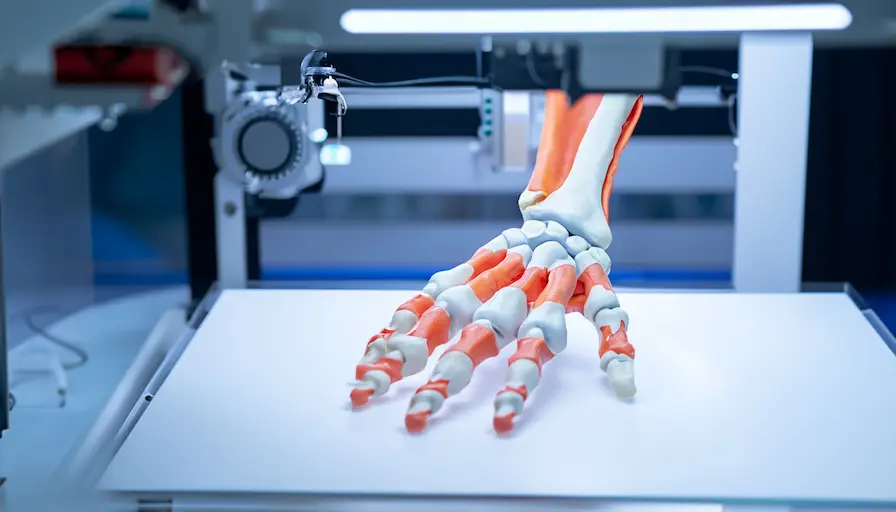
In the realm of healthcare, 3D printing has emerged as a transformative technology, revolutionizing medical applications in unprecedented ways. This cutting-edge process, also known as additive manufacturing, has opened new frontiers in personalized patient care, surgical planning, and medical device manufacturing. In this blog, we will explore the diverse and innovative applications of 3D printing in the medical field, uncover its profound advantages and potential challenges, and delve into the engineering properties that drive its life-changing impact. Let's embark on a journey through the realm of medical 3D printing and witness the transformative impact it holds for the future of healthcare.
Applications of 3D Printing in Medicine
The versatility of 3D printing in medicine has ushered in a new era of patient-specific treatments and interventions. From anatomical models that aid in surgical planning to customized prosthetics, implants, and medical devices, 3D printing has the potential to optimize patient outcomes. It enables the creation of patient-specific organ replicas, aiding medical professionals in understanding complex anatomies and improving surgical precision. Additionally, 3D-printed surgical guides and tools enhance procedural accuracy, reducing operative time and minimizing risks for patients.
Pros of 3D Printing in Healthcare
- Personalization: 3D printing allows for tailored medical solutions, providing individualized care that precisely matches patients' unique needs.
- Rapid Prototyping: BMedical professionals can quickly create prototypes of implants and devices, accelerating innovation and reducing development time.
- Surgical Simulation: Anatomical models facilitate preoperative planning and rehearsal, improving surgical outcomes and reducing complications.
- Customizable Medical Devices: 3D printing enables the production of patient-specific medical devices that offer enhanced comfort and functionality.
Cons of 3D Printing in Healthcare:
- Material Compatibility: Ensuring 3D printed medical devices are biocompatible and meet regulatory requirements poses challenges that require meticulous testing and validation.
- Cost and Scalability: Initial investment in 3D printing equipment and materials can be substantial, and scaling up production may present logistical challenges.
- Quality Control: Maintaining high-quality standards and consistency in 3D printing medical devices demand stringent quality control measures.
Engineering Properties Driving Medical Advancements:
The success of 3D printing in medicine hinges on critical engineering properties that dictate the safety and effectiveness of printed medical components:
- Biocompatibility: Materials used in medical 3D printing must be biocompatible to ensure they integrate well with the human body and minimize the risk of adverse reactions.
- Sterilization: Medical devices created through 3D printing must be sterilizable to meet stringent infection control standards.
- Mechanical Strength: 3D printed medical implants and prosthetics require adequate mechanical strength to withstand physiological forces and provide long-term functionality.
- Imaging Compatibility: Materials used should be compatible with medical imaging technologies for accurate preoperative planning and postoperative assessments.
Conclusion
The fusion of 3D printing and medicine has unleashed a paradigm shift in the healthcare landscape. From personalized patient care to surgical innovation and medical device production, this transformative technology holds the potential to redefine medical practices. While challenges exist, ongoing advancements in engineering properties and quality control processes are set to accelerate the integration of 3D printing in medical applications. As the field continues to evolve, 3D printing stands at the forefront of revolutionizing healthcare, offering hope for improved patient outcomes and a brighter future for medical innovation.
Tags
Content Summary
This blog explored the role of automation in 3D printing and its impact on manufacturing. From its applications across industries to the advantages and challenges it presents, automation offers a transformative approach to production. The engineering properties of materials empower automated systems to deliver precise, high-quality outputs. As automation continues to evolve, it promises to shape a dynamic future for 3D printing and manufacturing as a whole.