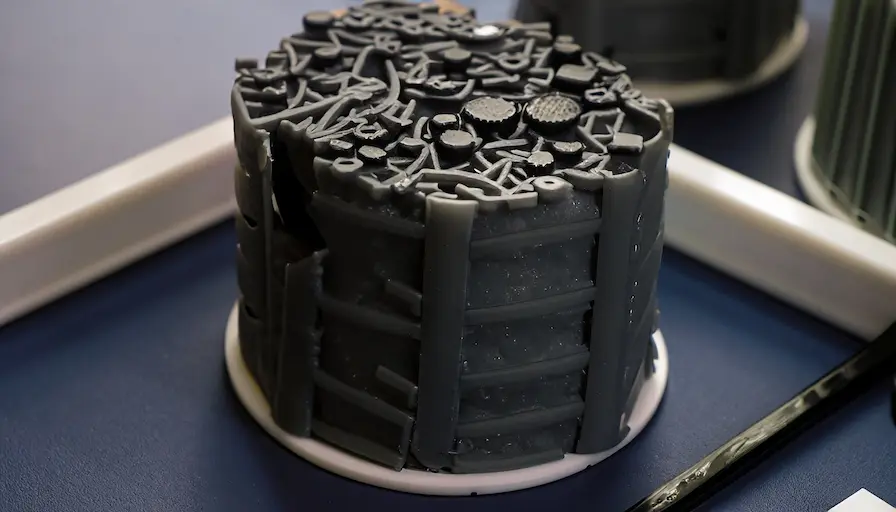
Additive Manufacturing, also known as 3D printing, has revolutionized various industries by enabling the production of complex geometries with high precision. One of the most widely used materials in this technology is Acrylonitrile Butadiene Styrene (ABS). In this blog, we will explore ABS and its applications, compare it with other materials, examine its physical and engineering properties, and highlight its advantages and disadvantages.
ABS in Additive Manufacturing
ABS is a thermoplastic polymer known for its versatility, strength, and ease of processing. It is commonly used in Fused Deposition Modeling (FDM) 3D printers due to its excellent printability and cost-effectiveness. The material is available in filament form, making it compatible with most consumer-grade and industrial 3D printers.
Applications of ABS
ABS is employed across a wide range of industries and applications, including:
- Prototyping: ABS is ideal for creating functional prototypes, allowing engineers to test and validate their designs before mass production.
- Automotive Parts: Many automotive components, such as interior trims, dashboard panels, and functional parts, are 3D printed using ABS due to its durability and impact resistance.
- Consumer Goods: ABS is commonly used in manufacturing household items, toys, electronic enclosures, and various consumer products.
- Medical Devices: Its biocompatibility and ability to withstand sterilization make ABS suitable for creating medical prototypes and devices.
Comparison with Other Materials
- PLA vs. ABS: PLA (Polylactic Acid) is another popular 3D printing material. While PLA is biodegradable and easier to print, ABS offers superior strength, impact resistance, and durability.
- PETG vs. ABS: PETG (Polyethylene Terephthalate Glycol) is known for its transparency and toughness. ABS, on the other hand, has higher heat resistance and is more suitable for high-temperature applications.
Pros and Cons of ABS in Additive Manufacturing
- Strength and Durability: ABS parts exhibit excellent mechanical properties, making them robust and long-lasting.
- Post-Processing: ABS parts can be easily sanded, glued, and painted, allowing for additional finishing touches.
- Impact Resistance:
- Low Cost: ABS is relatively inexpensive compared to some other 3D printing materials.
- Brittleness: Compared to some other materials, ABS can be somewhat brittle, affecting its use in certain applications.
- Warping: ABS tends to warp during printing, leading to potential warping issues and reduced dimensional accuracy.
- Fumes: Printing with ABS emits slight fumes that might require proper ventilation.
Physical Properties of ABS Before and After 3D Printing
- State: Solid (Filament form)
- Color: Various colors available
- Density: Approximately 1.04 g/cm³
- Melting Point: 105°C - 110°C
- Density: Slightly increased due to the addition of support structures and infill.
- Mechanical Properties: Exhibits excellent strength, impact resistance, and flexibility depending on the print settings.
Engineering Properties of ABS
- Tensile Strength: 40-50 MPa (MegaPascals)
- Elongation at Break: 10-50%
- Flexural Strength: 60-70 MPa
- Heat Deflection Temperature (HDT): 85°C - 100°C
- Coefficient of Friction: 0.4-0.6
- Water Absorption: 0.2% - 0.8% (over 24 hours)
Summary
ABS, a popular thermoplastic polymer in additive manufacturing, offers excellent strength, durability, and impact resistance. Its diverse applications span across industries like automotive, consumer goods, and medical devices. Despite its advantages, ABS is not without its challenges, including warping and brittleness. When choosing a 3D printing material, it's essential to consider the specific requirements of your project. ABS might be the perfect fit for certain applications, while other materials like PLA or PETG may suit different needs.
Tags
Conclusion
The versatility and strength of ABS have made it a staple material in the additive manufacturing industry. Its wide range of applications, combined with its favorable engineering properties, makes it a top choice for various projects. While it comes with some challenges, proper understanding and calibration can harness the full potential of ABS in additive manufacturing, unlocking endless possibilities for innovative creations.