Introduction to Fused Deposition Modeling (FDM) 3D Printing

By: Mitras 3D | 16th July 2023
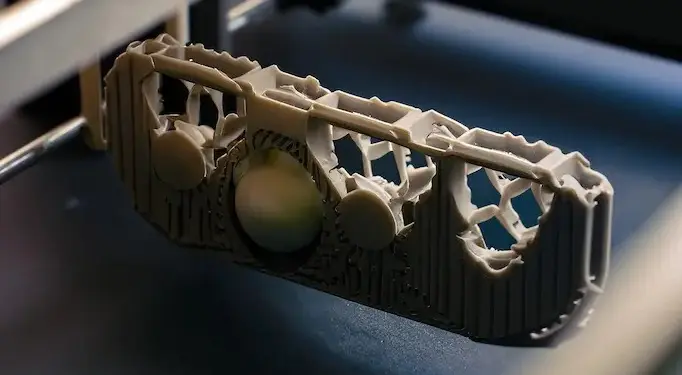
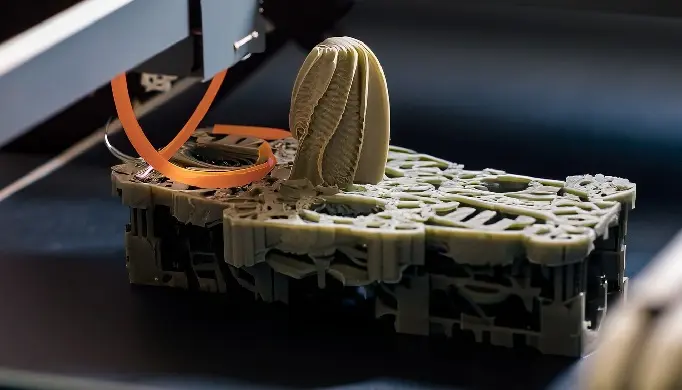
3d printed TPU material prototype

FDM, also known as Fused Deposition Modeling, has become exceedingly prevalent and favored among the various 3D printing technologies that exist today. This groundbreaking innovation has completely transformed the landscape of rapid prototyping and manufacturing, granting both individuals and companies the ability to fabricate tangible, three-dimensional objects based on digital blueprints. Originally conceptualized and brought to fruition by Scott Crump, the co-founder of Stratasys Inc., FDM has undergone significant advancements and expansions over the years, ultimately emerging as a versatile and readily accessible method of 3D printing.


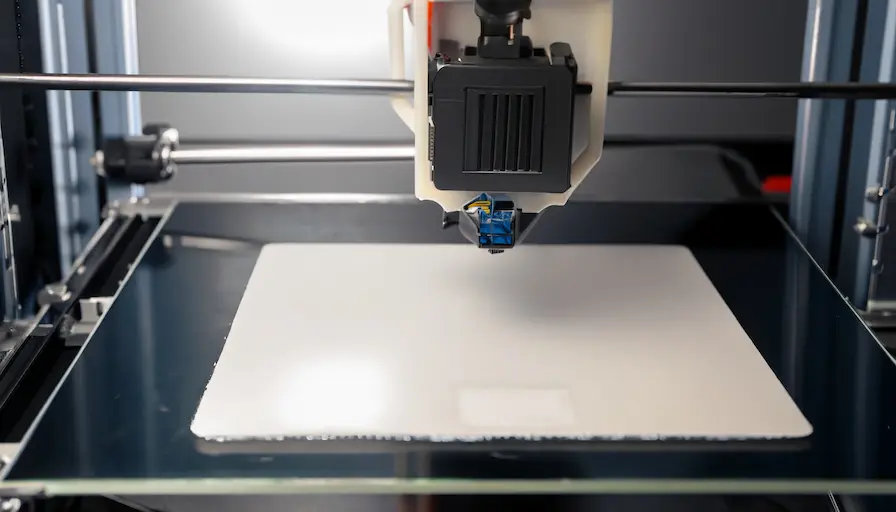
FDM is a member of the additive manufacturing category, which denotes the construction of objects through the sequential layering of material, as opposed to subtractive techniques that involve material removal. The fundamental principle that underlies FDM is the utilization of a thermoplastic filament as the material for printing. This filament is inserted into a heated nozzle, where it undergoes a transformation into a semi-liquid state. Subsequently, the nozzle accurately dispenses the molten material onto the build platform, one layer at a time, allowing each layer to solidify as it gradually cools.

The Process of 3D Printing:

TPU's exceptional properties have led to its extensive use in various industries and applications, including:

  • A digital 3D model of the intended thing serves as the basis for the digital design process. This design was produced with CAD software or downloaded from a collection of 3D models.

  • Slicing software is used to divide the 3D model into a series of tiny, horizontal layers. This program creates a collection of G-code instructions that direct the 3D printer in building the item layer by layer.

  • Preparation: The 3D printer has to be ready before printing. The build platform must be leveled, the nozzle must be clean, and the proper filament must be loaded.

  • Printing: As soon as the printing process begins, the heated printer nozzle travels in accordance with the G-code commands along the X, Y, and Z axes. The nozzle precisely distributes the melted filament.

  • Layer bonding: As layers are deposited, they merge with one another to form a solid bond. This guarantees the final 3D-printed object's structural integrity.

  • After each layer is deposited, it swiftly cools and hardens, making it possible for the next layer to cling to it successfully.

  • Finishing: After printing is finished, the object is completely allowed to cool before being taken off the build platform.