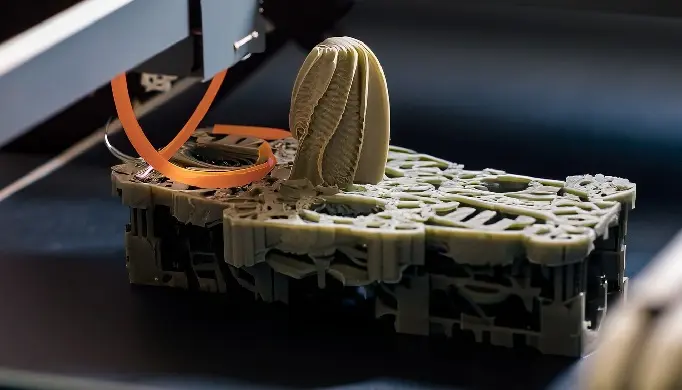
As Additive Manufacturing continues to advance, so does the range of 3D printing materials available. One such material that has gained popularity is PLA+, an enhanced version of the well-known Polyactic Acid (PLA). In this blog, we will explore PLA+ and its various applications, compare it with other 3D printing materials, examine its physical and engineering properties, and highlight its advantages and disadvantages.
PLA+ in Additive Manufacturing
PLA+ is an improved version of PLA, designed to overcome some of its limitations while retaining its eco-friendly and user-friendly attributes. With enhanced mechanical properties, PLA+ has emerged as a favorable option for additive manufacturing applications.
Applications of PLA+
PLA+ finds utility in a wide range of applications, including:
- Functional Prototyping: PLA+ is ideal for producing durable prototypes for functional testing before mass production.
- End-Use Parts: Its enhanced strength and toughness make PLA+ suitable for creating functional end-use parts.
- Artistic and Decorative Items: PLA+ is popular among artists and hobbyists for its smooth finish and wide color variety.
- Educational Models: Due to its ease of printing and safety, PLA+ is widely used in educational settings to create visual aids and teaching models.
Comparison with Other Materials
- PLA vs. PLA+: PLA+ offers superior mechanical properties compared to standard PLA, including increased impact resistance and tensile strength.
- ABS vs. PLA+: While ABS boasts higher heat resistance, PLA+ remains the preferred choice for eco-conscious users due to its biodegradability.
Pros and Cons of PLA+ in Additive Manufacturing
- Enhanced Mechanical Properties: PLA+ offers improved strength, impact resistance, and durability compared to standard PLA.
- Biodegradability: PLA+ retains the eco-friendly nature of PLA, making it a sustainable choice for environmentally-conscious projects.
- Ease of Printing: Like its predecessor, PLA+, is easy to work with and requires relatively low printing temperatures.
- Reduced Warping: PLA+ exhibits reduced warping, leading to enhanced dimensional accuracy in prints.
- Brittleness: While PLA+ is stronger than standard PLA, it may still be more brittle than some other materials.
- Limited Heat Resistance: As with PLA, PLA+ has lower heat resistance than materials like ABS, which may limit its use in high-temperature applications.
Physical Properties of PLA+ Before and After 3D Printing
- State: Solid (Filament form)
- Color: Various colors available
- Density: Approximately 1.25 g/cm³
- Melting Point: 190°C - 230°C
- Density: Slightly increased due to the addition of support structures and infill.
- Mechanical Properties: PLA+ exhibits improved tensile strength and impact resistance compared to PLA.
Engineering Properties of PLA+
- Tensile Strength: 60-80 MPa (MegaPascals)
- Elongation at Break: 10-20%
- Flexural Strength: 90-100 MPa
- Heat Deflection Temperature (HDT): 60°C - 70°C
- Coefficient of Friction: 0.5-0.6
- Water PLAorption: 0.2% - 0.6% (over 24 hours)
Summary
PLA+ represents a significant advancement in 3D printing materials, offering improved mechanical properties and versatility for additive manufacturing. Its wide range of applications, from functional prototypes to artistic creations, makes it a popular choice among users. While it may not match the heat resistance of materials like ABS, PLA+'s eco-friendly nature, ease of printing, and enhanced durability position it as an excellent option for diverse projects.
Tags
Conclusion
PLA+ has emerged as a promising material in Additive Manufacturing, combining the eco-friendly attributes of PLA with enhanced mechanical properties. Its applications span across various industries, from functional prototypes to artistic creations and educational models. Though not impervious to heat or brittleness, PLA+ delivers considerable advantages for a broad range of 3D printing projects, catering to both environmentally-conscious users and those seeking improved print performance.