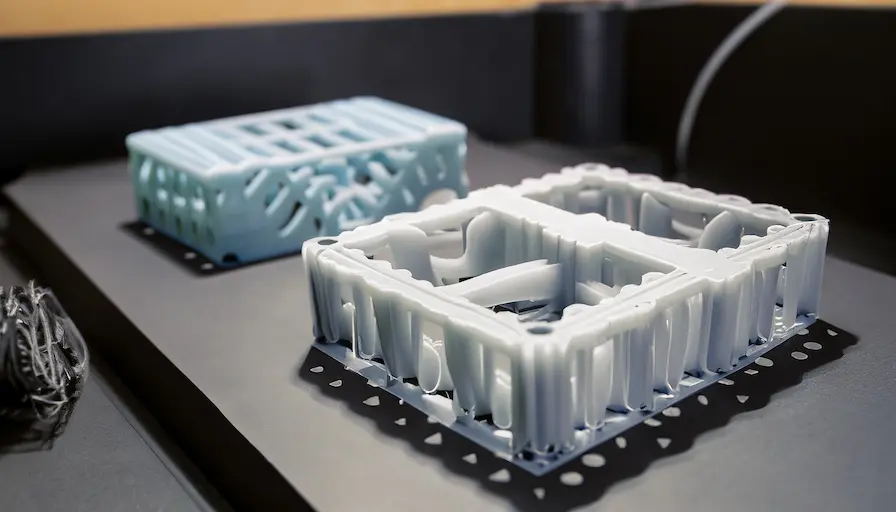
In the world of Additive Manufacturing or 3D printing, Polyethylene Terephthalate Glycol (PETG) has gained significant attention as a versatile and durable material. PETG offers a unique combination of properties that make it suitable for a wide range of applications. In this blog, we will explore PETG and its diverse applications, compare it with other 3D printing materials, examine its physical and engineering properties, and discuss its advantages and disadvantages.
PETG in Additive Manufacturing
PETG is a member of the polyester family and has emerged as a popular material in additive manufacturing due to its balanced mechanical properties and ease of use. PETG is known for its clarity, making it an attractive option for transparent or translucent applications.
Applications of PETG
PETG's versatility has led to its extensive use in various industries and applications, including:
- Functional Prototyping: PETG's strength and durability make it suitable for creating functional prototypes subjected to moderate stress.
- End-Use Parts: Its excellent mechanical properties allow PETG to be utilized for durable end-use parts in various applications.
- Medical Devices PETG's biocompatibility and clarity make it suitable for creating medical prototypes and devices.
- Food Packaging: PETG's FDA approval and clarity make it a preferred choice for food packaging and containers.
Comparison with Other Materials
- PLA vs. PETG: PETG offers higher impact resistance and durability compared to PLA, making it more suitable for applications requiring robustness.
- ABS vs. PETG: While ABS exhibits better heat resistance, PETG is more chemically resistant and transparent, making it useful in different scenarios.
Pros and Cons of PETG in Additive Manufacturing
- Impact Resistance: PETG possesses excellent impact resistance, reducing the likelihood of breakage during printing or use.
- Chemical Resistance: PETG's resistance to chemicals makes it suitable for applications requiring contact with various substances.
- Clarity and Transparency: PETG's optical clarity allows for the creation of transparent or translucent parts and enclosures.
- Biocompatibility: PETG's biocompatibility expands its use into medical and food-safe applications.
- Warping: PETG is susceptible to warping during printing, necessitating careful attention to print settings and bed adhesion.
- Lower Rigidity: Compared to some other materials, PETG may exhibit lower rigidity and stiffness.
Physical Properties of PETG Before and After 3D Printing
- State: Solid (Filament form)
- Color: Transparent or opaque in various colors
- Density: Approximately 1.27 g/cm³
- Melting Point: 210°C - 250°C
- Density: Slightly increased due to the addition of support structures and infill.
- Mechanical Properties: PETG exhibits excellent strength, impact resistance, and flexibility depending on the print settings.
Engineering Properties of PETG
- Tensile Strength: 50-70 MPa (MegaPascals)
- Elongation at Break: 100-150%
- Flexural Strength: 70-90 MPa
- Heat Deflection Temperature (HDT): 70°C - 80°C
- Coefficient of Friction: 0.4-0.5
- Water Absorption: 0.1% - 0.4% (over 24 hours)
Summary
Polyethylene Terephthalate Glycol (PETG) has become a popular choice in Additive Manufacturing due to its exceptional combination of strength, impact resistance, and clarity. Its numerous applications range from functional prototypes and end-use parts to medical devices and food packaging. While PETG's warping and lower rigidity may pose challenges, its chemical resistance and biocompatibility make it an attractive option for various projects.
Tags
Conclusion
PETG's unique combination of strength, clarity, and chemical resistance has positioned it as a valuable material in Additive Manufacturing. From functional prototypes to food-safe containers, PETG's versatility ensures its relevance across a wide array of industries. Though it has some challenges, such as warping, PETG's advantages in impact resistance and transparency make it a compelling choice for projects requiring durability and visual appeal.